

The Foundation
Preamble
The QuantumLeaks Foundation serves research and science by promoting and recognising structural interpretation of quantum entanglement.
The QuantumLeaks Foundation only publishes authorised information.
Vision
The foundation's vision is to enlighten the phenomenon of quantum entanglement in collaboration with two scientific giants, the Max Planck Society and Alexander von Humboldt Foundation.
Mission
The foundation promotes research and science pursuant to § 52 of the German Tax Code. The purpose of the foundation in accordance with § 2 No. 1 is specifically realized by promoting excellent projects of the Max Planck Society and / or the Alexander von Humboldt Foundation:
- -Explicitly to promote and appreciate the structural interpretation of quantum entanglement
- -By supporting young researchers and investigators, e.g. by awarding prizes or scholarships, or
- -To address quantum physics/ mechanics in schools in coordination with the Werner Heisenberg Foundation as needed.
Challenge & Participation
We use quantum entanglement for quantum cryptography, quantum computing, teleportation or for specific experiments on entanglement. With photons (from lasers), electrons and increasingly higher entities. Like gravity, the functionality of quantum entanglement is not understood yet.
There are three kinds of participants addressed equally and worldwide. Invited to share their unique interpretation of quantum entanglement are:
- -Scientists under contract with the Max Planck Society and future candidates
- -Scientists under contract with the Humboldt Foundation and future candidates
- -Young people before entering university or any higher acadamic formation.
Organisation
The prizes are funded by an established trust. The foundation is meant to give something back to the scientific community who inspired the founder during his time at Max Planck Institute for Solid State Research in Stuttgart. Thus it was obvious to him to establish a non-profit science trust foundation in June 2023, jointly with the Max Planck Foundation. The collaboration also involves the Humboldt Foundation with respect to funding and submission evaluation.
Contact
QuantumLeaks Foundation
Dr. Michael Lebert
E-Mail info@quantumleaks.org
abbr.: info@qleaks.org
c/o Max Planck Foundation
Karin Theede
E-Mail info@maxplanckfoundation.org
Aldringenstraße 4
80639 Munich
Tel +49 (0) 89 230 2260 –0
Bank details
Max Planck Foundation
Deutsche Bank
IBAN: DE23 7007 0010 0195 5384 00
BIC: DEUTDEMMXX
Purpose: QuantumLeaks Foundation

News
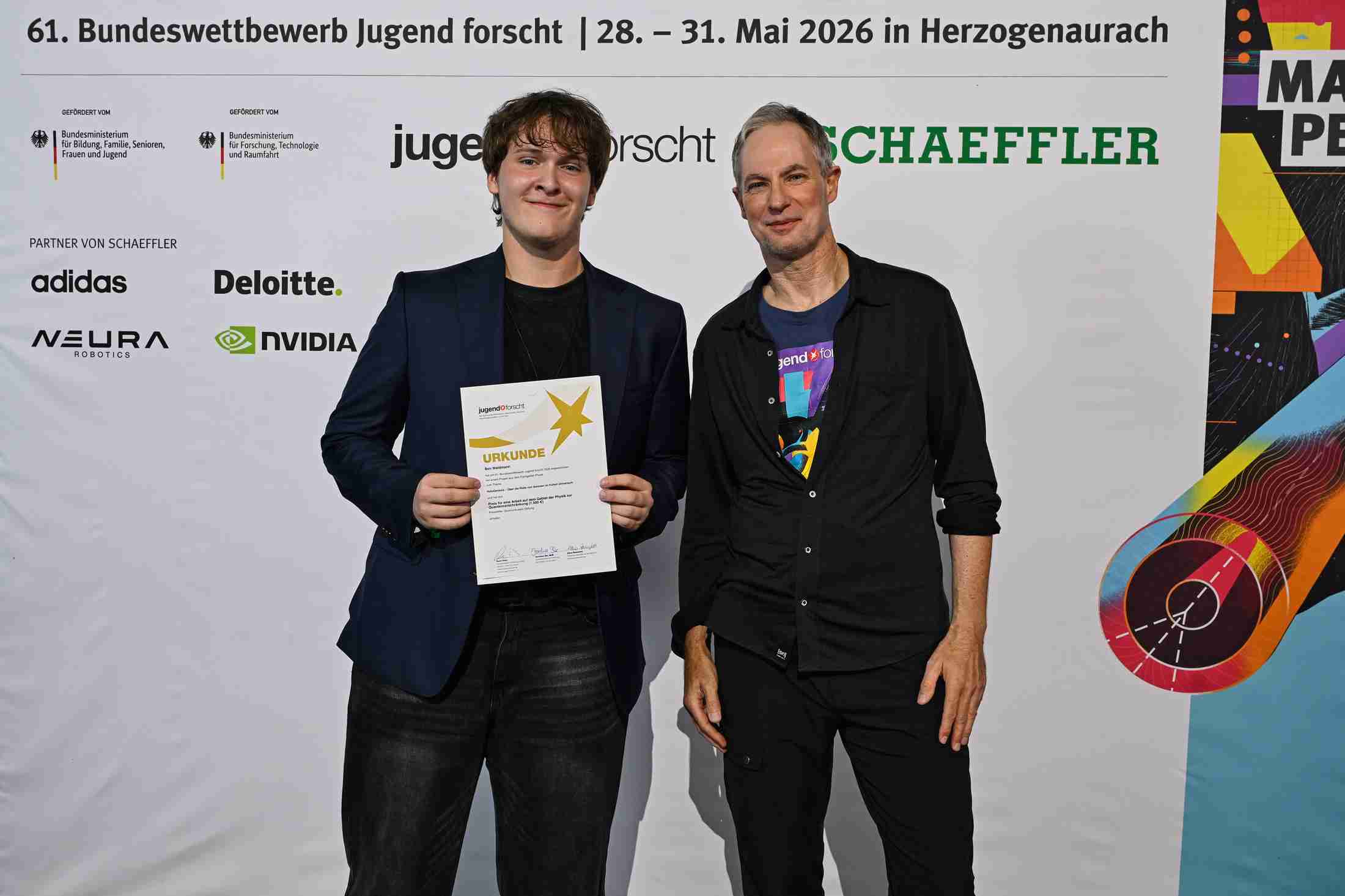
Jugend forscht Sonderpreis 2026
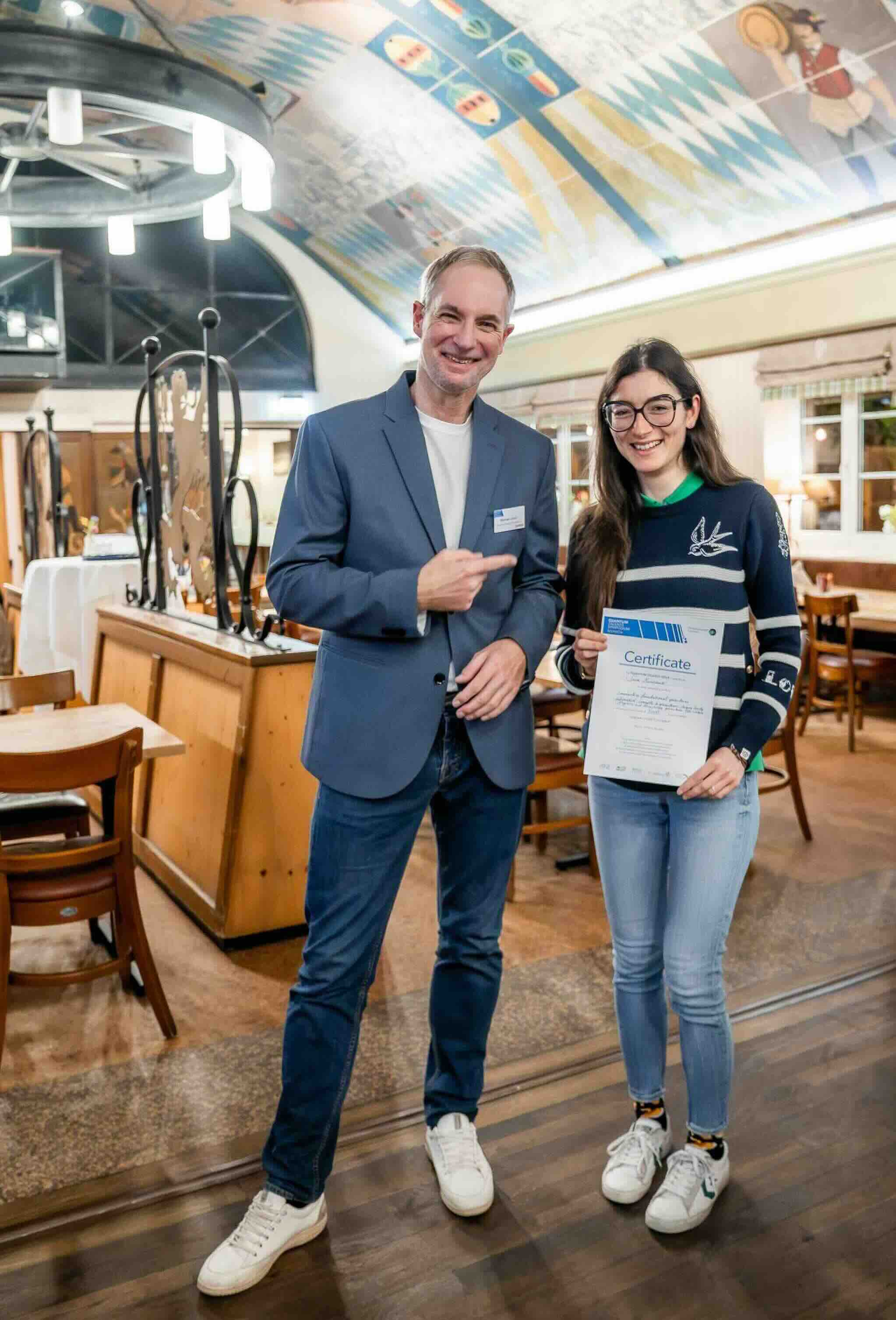
Ben Waldmann gewinnt 2026 beim Bundeswettbewerb Jugend forscht mehrere Auszeichnungen, darunter den Bundessieg im Fachgebiet Physik sowie den Sonderpreis der QuantumLeaks-Stiftung für seine Arbeit auf dem Gebiet der Physik zur Quantenverschränkung.
Herzlichen Glückwunsch Ben, zu diesem mehr als verdienten Erfolg. Dunkle Materie, Sternenentstehung und Quantenverschränkung sind Themen unserer Zeit. Als Schüler des Ulf-Merbold-Gymnasiums Greiz und Jungforscher des Schülerforschungszentrums Greiz stellt sich Ben diesen Themen mit bemerkenswerter Leichtigkeit. Einblicke in sein Rechenmodell, Jugend forscht-Projekt sowie das daraus entstandene Essay über Axion-Sterne und Quantenverschränkung sind hier zu finden. Wir freuen uns über Feedback und Anregungen.
Ben Waldmann receives multiple awards at the 2026 Jugend forscht National Competition, including the National First Prize in Physics and the QuantumLeaks Foundation Special Prize for his work in the field of physics on quantum entanglement.
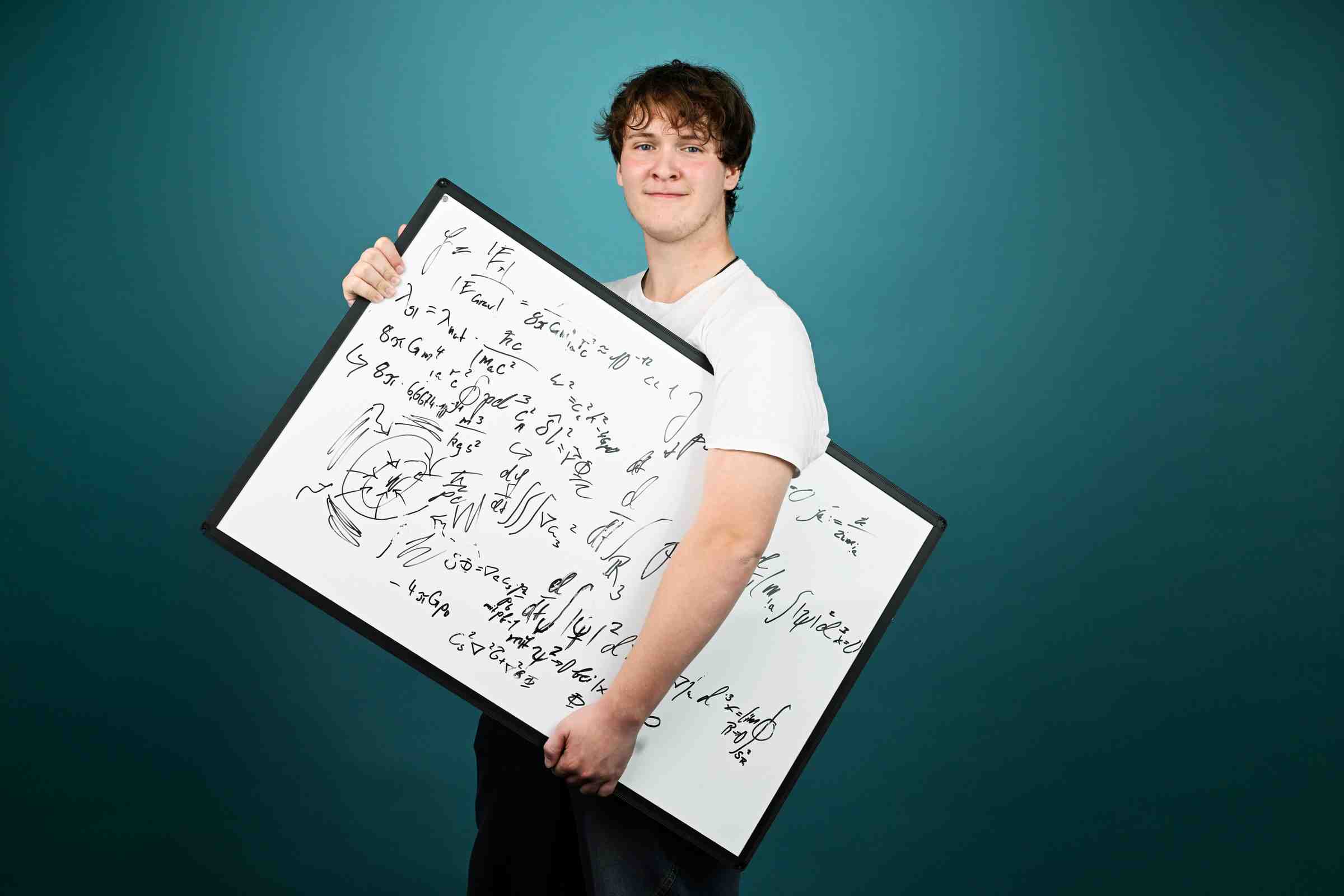
Huge congratulations to Ben on these more than well-deserved achievements. Dark matter, star formation and quantum entanglement are among the topics of our time. As a high school student at the Ulf Merbold Gymnasium Greiz and a young researcher at the Greiz Student Research Centre, he approaches these topics with remarkable confidence.
Insights into his computational model, Jugend forscht project, and the resulting essay on axion stars and quantum entanglement can be found here. We welcome your feedback and suggestions.
[Jugend forscht note]
©Stiftung Jugend forscht e. V.
Seit 2026 engagiert sich die QuantumLeaks-Stiftung zudem als Preisstifter bei Jugend forscht. Zusätzlich zum Preisgeld wird nach Absprache ein Praktikum im PhotonLab des Max-Planck-Instituts für Quantenoptik in Garching unweit von München im forschungsnahen Umfeld ermöglicht und finanziell unterstützt. Auch dort spielt die Quantenverschränkung eine Rolle, wenn es um die Verschränkung von Photonen (Lichtteilchen) geht.
Since 2026, the QuantumLeaks Foundation also supports Germany's Jugend forscht competition as a prize sponsor. In addition to the prize money, the Foundation facilitates and financially supports an internship at the PhotonLab of the Max Planck Institute of Quantum Optics in Garching near Munich. Quantum entanglement also plays a role there when it comes to the entanglement of photons (particles of light).Entanglement Prize 2025
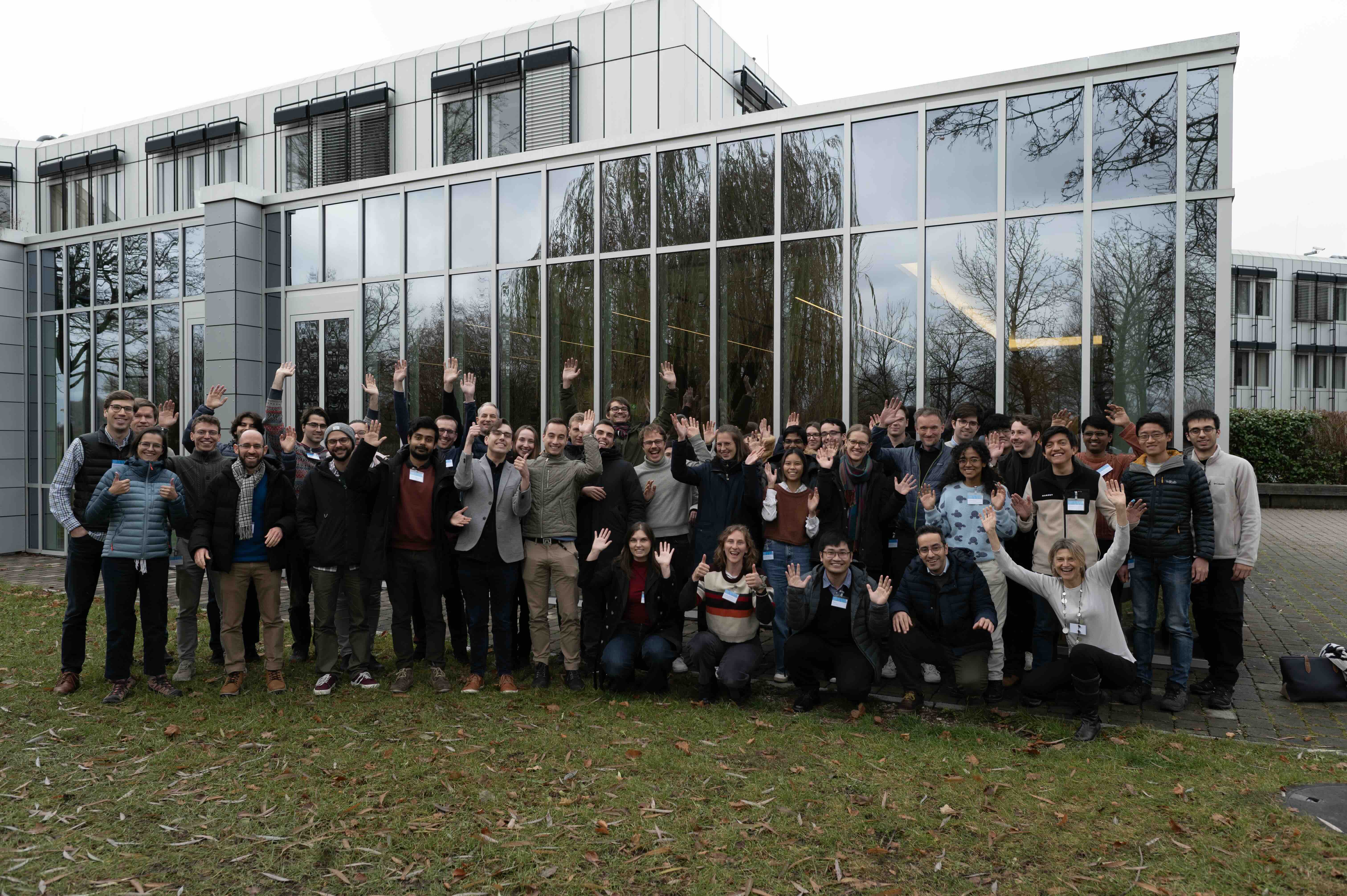
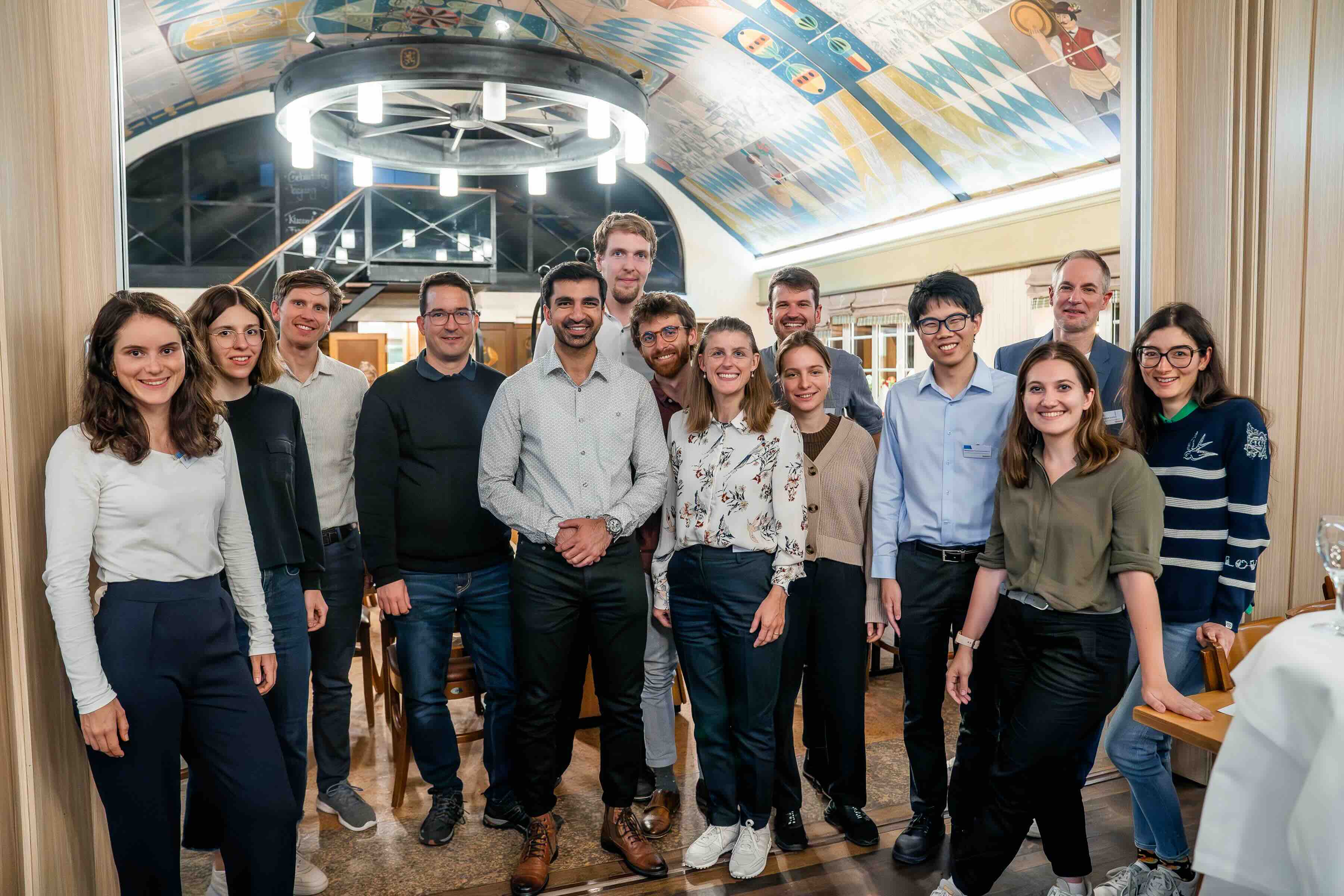
This year's Quantum Talents Symposium Munich 24-25 November 2025 was the vibrant stage for the finalists* working within the field of quantum
computing. Enabled and hosted again nicely by Munich Quantum Valley (MQV), Munich Center for Quantum Science and Technology (MCQST) and Max Planck Institute of Quantum Optics (MPQ).
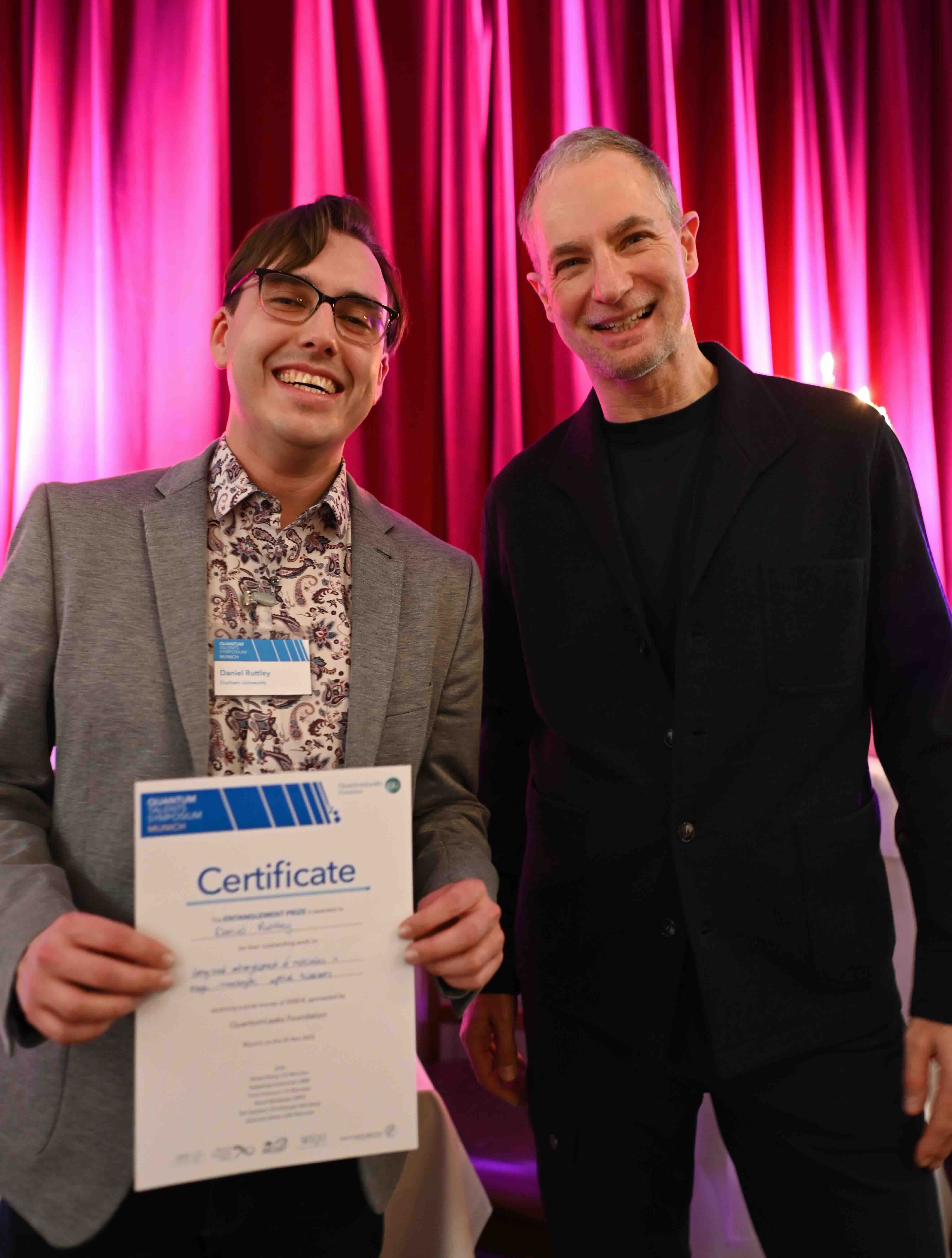
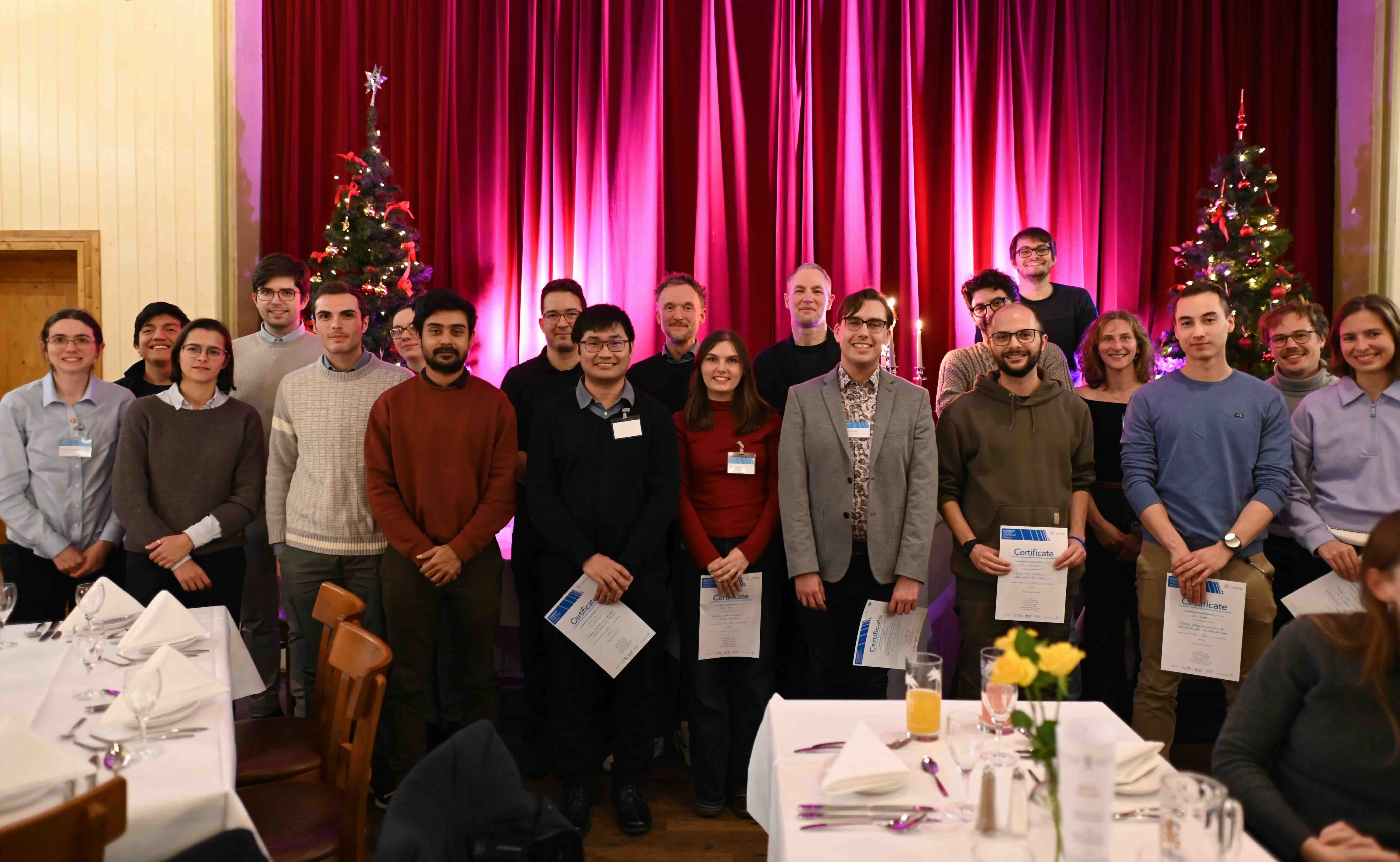
Huge congratulations to Daniel K. Ruttley for receiving the Entanglement Prize 2025 of the QuantumLeaks Foundation. Being a postdoctoral researcher at the Durham Quantum Light and Matter (QLM) research section, Physics Department/ Durham University, Daniel 'Dan' is awarded for his work on 'Long-lived entanglement of molecules in magic-wavelength optical tweezers'.
Left to right: Grace Sommers* (Princeton), Rafael A. Flores-Calderón (Boulder), Filipa C.R. Peres* (Granada), Petar Bojovic* (MPQ), Antonio Mello* (SISSA/CCQ), Nadezhda Kukharchyk (WMI), Nilotpal Chakraborty* (Cambridge), Robert König (TUM), Visal So* (Rice Univ.), Frank Pollmann (TUM), Molly Smith* (Oxford), Michael Lebert (QuantumLeaks Foundation), Daniel K. Ruttley* (Durham), Davide Dreon (planqc), Zack Weinstein* (Caltech), Petr Zapletal (FAU), Caroline de Groot (MCQST), Eric Hyyppä* (IQM), Benjamin Schiffer* (MPQ), Melissa Will* (TUM).
[MQV note]
© MQV / Flavio Cury
Sensing Quantum Symposium
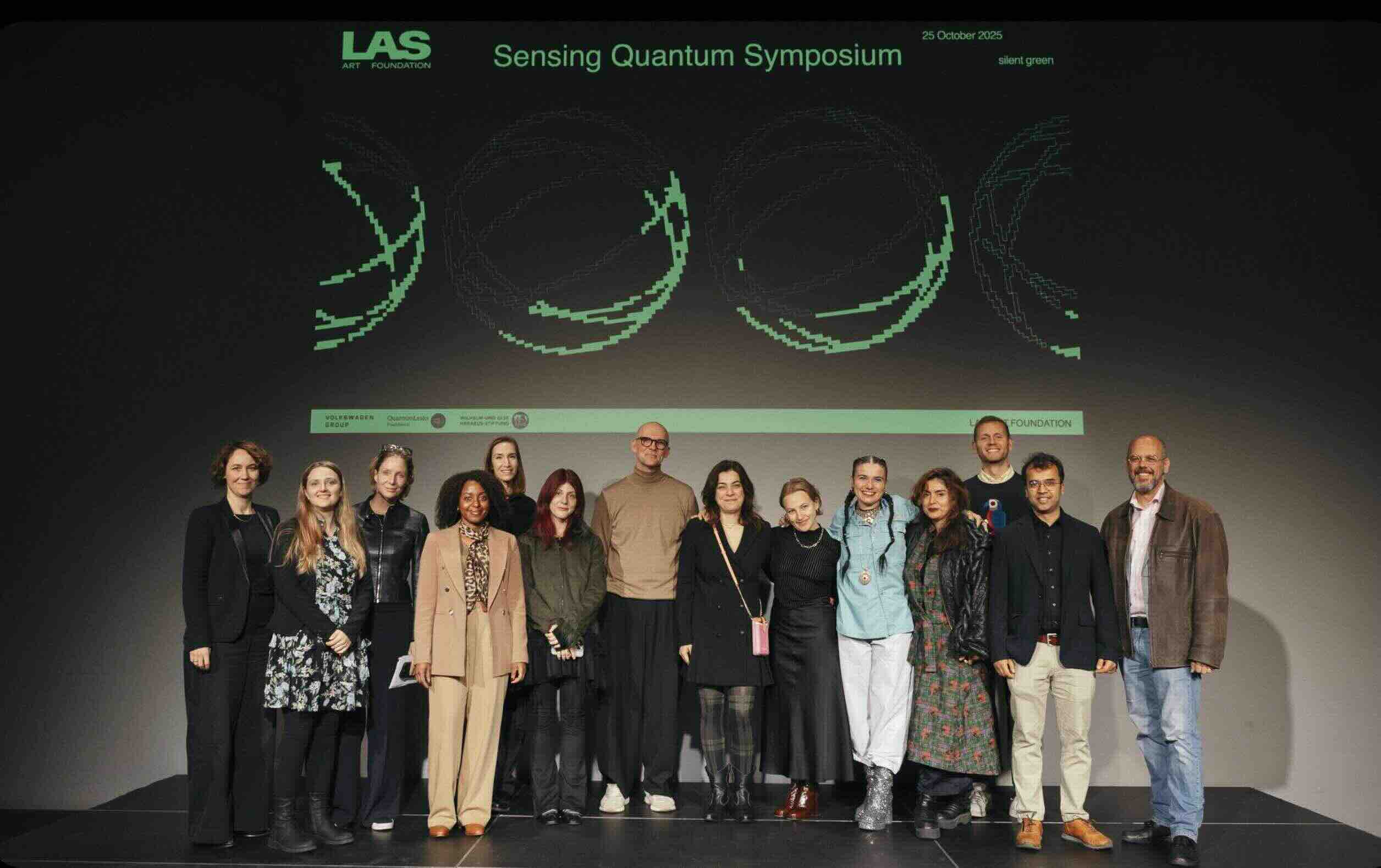
On 25 October 2025 LAS Art Foundation brought together quantum scientists, philosophers and artists for a day of panel discussions. To address fundamental questions about the rise of quantum technologies and to explore the implications and possibilities they open up.
It was an excellent opportunity to familiarise a heterogenous audience with the phenomena of quantum entanglement within the chapter 'From Teleportation to Imaging: Entanglement in Action'. Starting with its discovery in 1935 (Einstein/ Schrödinger), to its operationalisations like quantum key distribution, dense coding, quantum teleportation or ghost imaging.
© LAS Art Foundation / Yanina Isla
Quantum Physics at School
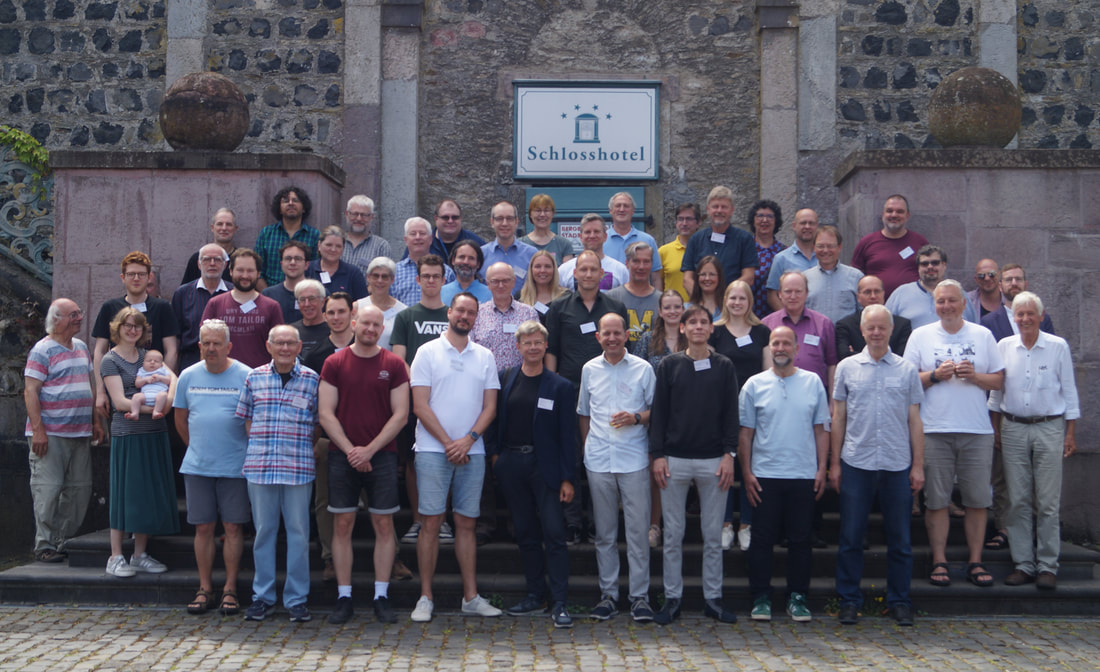
The workshop Quantum Physics at School hosted 27-29 June 2025 by the Heisenberg Society provided a broad range of physics didactic content. With respect to quantum mechanics including the reception of quantum entanglement.
The talk about entanglement at school Verschränkung in der Schule refers to theoretical physicist Prof. Dr. Reinhard F. Werner (p.47), whose vast contributions to quantum information and entanglement can be reviewed here.
© Heisenberg Society / Helmut Fink
Entanglement Prize 2024
The inspiring Quantum Talents Symposium Munich 16-17 September 2024 was an outstanding stage for the finalists* to share their groundbreaking research in the field of quantum physics and science, enabled and hosted nicely by Munich Center for Quantum Science and Technology (MCQST), Munich Quantum Valley (MQV) and Max Planck Institute of Quantum Optics (MPQ).
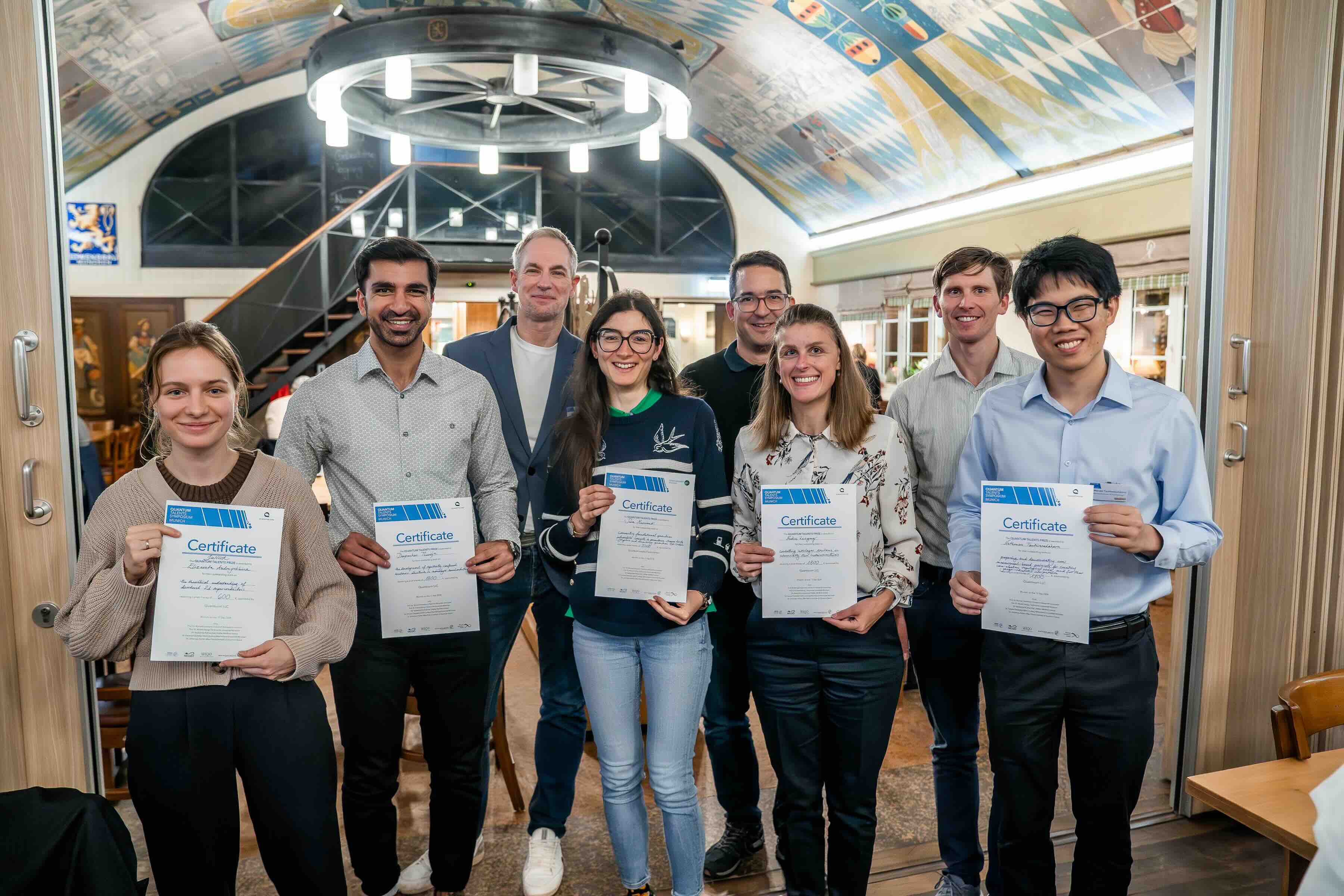
Congratulations once again Sara Murciano for receiving the Entanglement Prize 2024 of the QuantumLeaks Foundation. Being a postdoctoral researcher at the Walter Burke Institute for Theoretical Physics, California Institute of Technology (Caltech), Sara is awarded for her work on 'connecting fundamental quantum information concepts to quantum many-body physics and discovering quantum ice-cream'.
Left to right: Hannah Lange* (LMU), Luisa Eck* (Oxford), Johannes Zeiher (MPQ), Robert König (TUM), Deepankur Thureja* (Harvard), Jann Hinnerk Ungerer* (Harvard), Fabrizio Berritta* (Univ. Copenhagen), Nadine Leisgang* (Harvard), Matthias Bock* (Univ. Innsbruck), Elizaveta 'Liza' Andriyakhina* (FU Berlin), Nathanan 'Nat' Tantivasadakarn* (Caltech), Mariia Kuzina (MCQST/LMU), Michael Lebert (QuantumLeaks Foundation) and Sara Murciano* (Caltech).
[MPQ note]Ideas
Thesis
Hypothesis for discussion: The collapse of space (spatial separation)-and thus of time-is a necessary criterion for quantum nonlocality and entanglement.
Antitheses
- Statements of researchers on quantum entanglement -
"Das vorliegende Axion-Modell legt nahe, dass quantenmechanische Nichtlokalität als ein formgebendes kosmisches Bindeglied wirken könnte, ohne dass hierfür eine fundamentale Aufhebung der räumlichen Trennung oder eine Auflösung der Raumzeitstruktur vorausgesetzt werden muss. Die dem Vielteilchenzustand zugrundeliegende Quantenverschränkung bleibt im makroskopischen Regime erhalten und trägt über die außergewöhnlich große de-Broglie- beziehungsweise Kohärenzlänge der ultraleichten Axione maßgeblich zur Ausbildung einer räumlich ausgedehnten, stabilen gravitativen Potenzialsenke bei. Auf diese Weise entsteht ein kohärentes Gravitationsfundament, welches das Jeans-Kriterium lokal herabsetzt und somit den kollapsfördernden Nährboden bietet, in dem die allerersten galaktischen Strukturen effizient heranwachsen können."
"The present axion model suggests that quantum nonlocality may act as a formative cosmological binding mechanism, without requiring a fundamental removal of spatial separation or a dissolution of the underlying space-time structure. The quantum entanglement underlying the many-body state is assumed to persist in the macroscopic regime and, through the exceptionally large de Broglie wavelength and corresponding coherence length of ultralight axions, contributes significantly to the formation of an extended and stable gravitational potential well. In this picture, a coherent gravitational framework emerges that locally lowers the Jeans threshold, thereby providing collapse-favouring conditions under which the earliest galactic structures can form efficiently." (machine translated)
Ben Waldmann, Ulf-Merbold-Gymnasium Greiz, Schülerforschungszentrum Greiz (2026)
"Quantum nonlocality and entanglement do not require any collapse of space or time. Entanglement is simply the way different parts of a shared quantum state remain connected, regardless of the distance between them. I prefer to think of it as the wiring on a circuit board: the components stay in fixed positions, but the wires allow them to operate together without altering the board itself. Penrose, for example, discusses quantum links that extend across space and time, yet even in his account there is no need for spacetime to collapse for those links to exist."
Dr. Daniel K. Ruttley, Department of Physics, Durham University (2025)
"I like to think of it the other way around: entanglement is the fabric of spacetime, to quote Van Raamsdonk. When you entangle individual qubits, you create a network in two dimensions, similar to how the interior of spacetime can emerge from entangled boundaries in gravitational theories. In this holographic approach entanglement generates the geometry of spacetime instead of collapsing space or time."
Dr. Sara Murciano, Walter Burke Institute for Theoretical Physics, Caltech (2024)
"I would recommend avoiding the term 'criterion'. In quantum mechanics, it is particularly important not to think of quanta as mass points. Nonlocality and entanglement are simply not compatible with the classical concepts of space and time. We can ask: where do these classical concepts come from? Should we modify (generalise) them or should we accept their incompatibility? We have to think about time together. Time does not collapse. This is only special if you are familiar with Kant's 'a priori' and believe that the 'a priori' must be there before any cognition and cannot be changed by the act of cognition."
Prof. Dr. Siegmar Roth, formerly Max Planck Institute for Solid State Research, dpt. Prof. Dr. Klaus v. Klitzing (2024)
References
H. Minkowski, Raum und Zeit, Jahresberichte der Deutschen Mathematiker-Vereinigung (1909)
H. Weyl, Raum Zeit Materie - Vorlesungen über allgemeine Relativitätstheorie, Springer (1919)
W. Heisenberg, Über quantentheoretische Umdeutung kinematischer und mechanischer Beziehungen, Zeitschrift für Physik, 33, 879 (1925)
P.A.M. Dirac, The principles of quantum mechanics, The Clarendon Press, Oxford (1930)
J. v. Neumann, Mathematische Grundlagen der Quantenmechanik, Springer (1932)
E. Schrödinger, Die gegenwärtige Situation in der Quantenmechanik, Die Naturwissenschaften, 50, 844 (1935)
E. Schrödinger, Probability relations between separated systems, Mathematical Proceedings of the Cambridge Philosophical Society, 32, 446 (1936)
D. Bohm, Quantum Theory, Prentice-Hall (1951)
D. Bohm, A Suggested Interpretation of the Quantum Theory in Terms of "Hidden" Variables. I and II, Phys. Rev. 85, 166 and 180 (1952)
J.S. Bell, On the Einstein-Podolsky-Rosen Paradox, Physics, 1, 3, 195 (1964)
J.F. Clauser, M.A. Horne, A. Shimony and R.A. Holt, Phys. Rev. Letters 23, 880 (1969)
W. Heisenberg, Physics and Beyond: Encounters and Conversations, Harper & Row (1971)
S.W. Hawking, Particle Creation by Black Holes, Commun. Math. Phys. 43, 199 (1975)
A. Aspect, P. Grangier and G. Roger, Phys. Rev. Lett. 47, 460 (1981)
R. Penrose, On Gravity's role in Quantum State Reduction, General Relativity and Gravitation 28, 581 (1996)
A. Zeilinger, Dance of the Photons, Farrar, Straus and Giroux (2010)
M. Van Raamsdonk, Comments on quantum gravity and entanglement, arxiv.org/pdf/0907.2939 (2010)
M. Van Raamsdonk, Building up spacetime with quantum entanglement, arxiv.org/pdf/1005.3035 (2010)
Glossary
Taken partly from the delightful book "Dance of the Photons" by Anton Zeilinger marked with quotes. Science and humor are not contradictions, sometimes violating Bell's inequality. Key formulas be added over time if necessary.
Bell’s inequality
"A mathematical expression derived by John Bell. It expresses the fact that correlations between two classical systems are limited in strength. Quantum mechanical measurements on entangled states are able to violate Bell’s inequality."
Bell states
"The concept that the polarizations of two photons can be entangled in four different ways with each other. These are the four maximally entangled Bell states."
Double-slit experiment
"An experiment where light, or any other particle, passes a diaphragm with two slit openings. The resulting particle distribution pattern on an observation screen depends on which kind of information exists about the path taken by the particles." Feynman: We choose to examine a phenomenon which is impossible, absolutely impossible, to explain in any classical way, and which has in it the heart of quantum mechanics. In reality, it contains the only mystery [Fey62].
Entanglement
"The concept in quantum physics that two or more particles can be connected in a much stronger way with each other than in classical physics. Measurement on one can instantly, over an arbitrary distance, influence the quantum state of the other one. Albert Einstein called entanglement 'spooky'."
Heisenberg’s uncertainty principle
"The idea that quantum particles cannot be at a well-defined position and have a well-defined momentum (that is, speed) at the same time. If one is more certain, the other becomes more uncertain."
Imaginary Time
Hawking describing the Carter-Penrose diagram: There is another asymptotically flat region on the left that seems to correspond to another universe that is connected to ours only through a wormhole. However, as we shall see, it is connected to our region through imaginary time [Haw94].
Particle
"A particle is well localized in a single position and moves along a well-defined trajectory through space."
Photon
Photons have each a definite energy and momentum, depending on the frequency of the light. A fraction of a photon is never observed [Dir30].
Quantum
"Initially, each atomic or subatomic particle. Today, every system that shows quantum behavior such as superposition and entanglement."
Quantum complementarity
"The feature that two or more observables of a quantum system—for example, the path taken by a particle in a double-slit experiment and the interference pattern—cannot be well-defined at the same time."
Quantum mechanics
"As opposed to classical mechanics, the realm of physics that describes, originally, very small particles, but now, increasingly, larger objects. It is governed by notions like quantum uncertainty and entanglement." Feynman: “Quantum mechanics” is the description of the behavior of matter and light in all its details and, in particular, of the happenings on an atomic scale. Things on a very small scale behave like nothing that you have any direct experience about. They do not behave like waves, they do not behave like particles, they do not behave like clouds, or billiard balls, or weights on springs, or like anything that you have ever seen [Fey62].
Quantum nonlocality
"The viewpoint of most physicists is that the violation of Bell’s inequality shows us that quantum mechanics is nonlocal. This nonlocality is exactly what Albert Einstein called 'spooky'; it seems that the act of measuring one particle could instantly influence the other one."
Quantum superposition
"The feature that a quantum system can be in two states at the same time, for example, two different spin states."
Quantum teleportation
"The transfer of a quantum state -that is, certain properties of a system- over to another system, which may be in principle arbitrarily far away. Quantum teleportation uses entanglement as the means of transmitting that information."
Space
Form of the physical reality (Form der körperlichen Wirklichkeit) [Wey19].
Spacetime
There is no need to introduce the idea of an ether, whose presence anyway cannot be detected, as the Michelson–Morley experiment showed. The theory of relativity does, however, force us to change fundamentally our ideas of space and time. We must accept that time is not completely separate from and independent of space, but is combined with it to form an object called spacetime [Haw94].
Time
Form of the stream of incidents (Form des Erlebnisstromes) [Wey19].
- Legal Notice / Impressum
- © QuantumLeaks Foundation